Mom pushed the repayment proposal across the dining table toward Lauren with both hands.
For the first time all evening, she stopped looking embarrassed.
That mattered more to me than anything inside Mr. Bennett’s folder.
For six months, my mother had behaved as though Lauren’s refusal to repay her was somehow something she needed to apologize for.
She lowered her voice whenever she mentioned the money.
She said things like, “I shouldn’t have lent all of it.”
Or, “Maybe I should have known better.”
Never:
Lauren broke her promise.
Never:
That money is mine.
Generous people have a strange habit of blaming themselves when somebody exploits the generosity.
Mom was no different.
She was 70.
Widowed.
Retired.
She had spent years creating that small emergency fund precisely because she never wanted to become dependent on anybody.
Five thousand dollars might not sound enormous to everyone.
To Mom, it represented security.
A broken appliance.
A medical expense.
A repair.
A month when something unexpected happened and she could still handle it herself.
Then Lauren needed money.
And Mom gave her all of it.
I did not know until the refrigerator stopped working.
That was the ridiculous part.
The emergency arrived.
The emergency fund was gone.
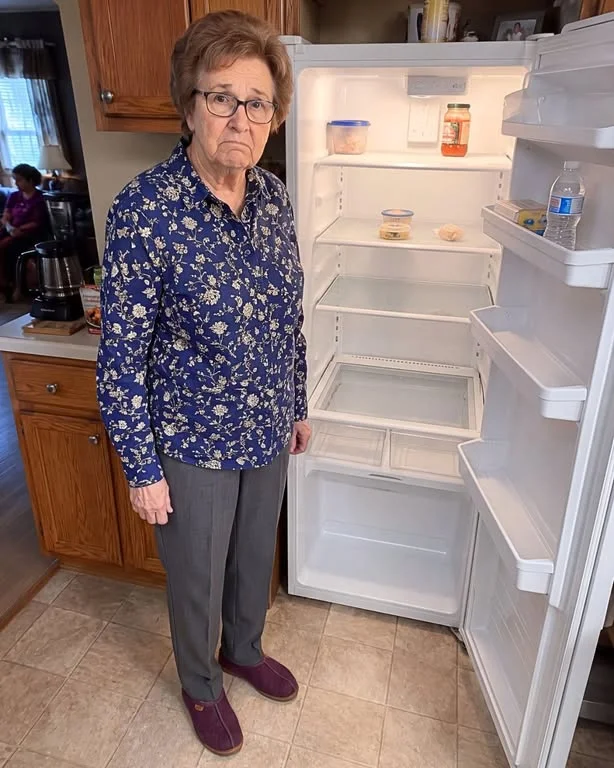
I had stopped by Mom’s house that Saturday and immediately noticed the refrigerator was too quiet.
The light still came on.
The food inside was warming.
Mom had already moved what she could into a cooler.
“Come on,” I told her. “We’ll go replace it.”
She shook her head.
“Honey, I don’t have my savings right now.”
At first, I assumed she had spent the money on something important.
Maybe a medical bill she had not told me about.
Maybe a home repair.
Then she said Lauren’s name.
My brother’s wife.
Someone who had never been especially interested in Mom until she needed cash.
Almost six months earlier, Lauren’s SUV had been damaged in a minor accident.
Her liability coverage took care of the other driver’s repairs.
Her own vehicle was a different problem.
She needed several thousand dollars.
Apparently she went to Mom.
Not my brother.
Not me.
Mom.
That detail bothered me.
Lauren knew exactly who would have the hardest time saying no.
My mother had always been generous.
Too generous sometimes.
She believed that if someone asked sincerely, refusing meant you were failing some test of kindness.
Lauren understood that.
She promised repayment.
Mom believed her.
Then six months went by.
No payment.
Not five hundred.
Not fifty.
Nothing.
Meanwhile, Lauren kept spending.
Designer clothes.
Meals out.
A new handbag by the time she arrived at my house for dinner.
I did not resent her owning nice things.
That was not the point.
People can spend their money however they want.
But once you borrow someone else’s emergency fund and promise to return it, pretending repayment is optional becomes something else.
Especially when the lender is a 70-year-old retiree.
I called Lauren immediately after Mom told me.
I expected excuses.
Maybe embarrassment.
Maybe:
I’m short this month.
Or:
I’ll start paying next Friday.
Instead, Lauren laughed.
“Yeah, I borrowed it. I CLEARLY needed it more than your mom did!”
That sentence changed the conversation.
I asked when she intended to repay it.
She sighed.
“Why does your mom even need that much money?”
I remember looking at Mom’s dead refrigerator while Lauren spoke.
“She’s retired, sits at home, and DOESN’T DO ANYTHING. What does she even spend money on?”
I had to grip the phone.
There are moments when anger wants an immediate job.
Shout.
Insult.
Threaten.
Tell the person exactly what you think of them.
I almost did.
Then I stopped.
Because none of those things would put $5,000 back into Mom’s account.
The refrigerator needed replacement.
My anger did not.
So I changed my voice.
“You’re right.”
Lauren paused.
I think she actually believed she had convinced me.
“Come over tomorrow. Family dinner.”
“Fine. What time?”
“Six.”
After we hung up, Mom stared at me.
“What are you doing?”
“Giving her one chance to fix this properly.”
Mom became nervous immediately.
“I don’t want a big fight.”
“There won’t be one.”
That was a promise I intended to keep.
I did not want Lauren screamed at.
I did not want my brother forced to choose sides in some dramatic scene before he understood what had happened.
I wanted facts on a table.
So I asked Mom what evidence she still had.
That question produced more than I expected.
First, the bank transfer.
Mom had sent the entire $5,000 electronically.
In the memo field, she had written:
LOAN.
One word.
Simple.
Then there was the voicemail.
Lauren had left it the evening after receiving the money.
Mom had almost deleted it months earlier.
She kept it because she liked hearing Lauren thank her.
That made my chest hurt.
Lauren’s voice was warm in the recording.
Grateful.
She promised to repay “the five thousand” once the car repairs stopped hurting their budget.
Nothing ambiguous.
No gift.
No misunderstanding.
A loan.
I asked Mom whether she wanted help getting it back.
She hesitated.
“I don’t want your brother angry with me.”
That was when I realized how much emotional control Lauren’s behavior had created.
Mom had been deprived of $5,000.
Yet she was worried the family might punish her for objecting.
I sat beside her.
“This is your money.”
She looked down.
“I know.”
“No. I need you to hear yourself say it.”
Mom took a breath.
“It’s my money.”
That was enough.
Mr. Bennett came into the story because he already knew Mom.
Two years earlier, he had helped her update estate documents after Dad died.
Lauren had met him briefly during a family gathering when Mom was sorting paperwork.
That was why I knew she would recognize him.
I called him.
Not to threaten Lauren.
Not to manufacture criminal charges.
A private debt dispute did not magically become a crime because I was angry.
I wanted Mom to understand her options.
Mr. Bennett asked whether Mom could document the loan.
Bank record.
Voicemail.
Any messages.
Yes.
Then he asked the most important question.
“What does your mother want?”
Repayment.
Not revenge.
Good.
He helped structure a reasonable proposal.
Monthly payments.
Specific dates.
Nothing punitive.
Nothing designed to make Lauren fail.
The goal was to get Mom’s emergency fund restored.
That was it.
Sunday evening, Lauren arrived wearing expensive shoes and carrying the new handbag.
Again, the handbag did not prove she had $5,000 available.
I reminded myself of that.
Appearances are not bank statements.
I did not want to become exactly what I disliked in her—someone inventing certainty because it suited the story.
But seeing that bag while Mom’s refrigerator sat dead at home made restraint difficult.
My brother came with her.
He looked normal.
That told me he probably did not know why dinner had been arranged.
Mom was already seated.
She looked uncomfortable.
Lauren noticed.
“Why does everyone look so serious?”
I smiled.
“We’re waiting for one more person.”
The doorbell rang several minutes later.
“That should be him.”
I opened the door.
Mr. Bennett entered carrying one slim folder.
Lauren’s face changed immediately.
“What is he doing here?”
My brother looked from her to me.
“You know him?”
“Your mother’s attorney,” Lauren said.
Mr. Bennett corrected gently.
“I’ve done some estate work for Mrs. Dawson. Tonight I’m here at her request.”
He took the empty chair beside Lauren.
Then he looked at Mom.
“Before we begin, I want to make sure this is what you want.”
Mom’s fingers tightened around her napkin.
“Yes.”
That was when Lauren stopped pretending the dinner was ordinary.
“What exactly is this?”
I placed my phone on the table.
“Mom wants her $5,000 back.”
Lauren laughed.
“She gave me that.”
Mom lifted her head.
“No.”
The room became quiet.
“I lent it to you.”
Lauren looked genuinely offended.
“You can’t prove that.”
Those words were almost a gift.
I unlocked the phone.
The voicemail played.
Lauren’s own voice.
Warm.
Grateful.
Thanking Mom.
Promising to repay the five thousand.
My brother turned toward her.
He had not heard it before.
I watched that carefully.
He was not angry at Mom.
He was confused.
Then hurt.
“How much did she give you?”
Lauren looked at him.
He repeated it.
“Five thousand?”
She folded her arms.
“I was going to pay it back.”
“When?”
“Why are you interrogating me?”
There it was.
A factual question transformed into mistreatment.
Mr. Bennett did not join the argument.
He opened the folder and placed the bank record on the table.
$5,000.
Memo:
LOAN.
Lauren’s expression changed again.
Not because the memo alone determined everything.
Because it matched her voicemail.
Two separate records telling the same story.
She had borrowed the money.
She had promised repayment.
I looked at Mom.
She was staring at the transfer as though seeing it for the first time.
Maybe in a way she was.
For months, the money had existed in family language.
Favor.
Help.
Lauren needed it.
Mom was retired.
Now it existed as documentation.
Amount.
Date.
Loan.
Words matter.
Records matter more.
Lauren turned toward my brother.
“You’re seriously going to sit there while they do this?”

He looked stunned.
“To you?”
Lauren opened her mouth.
He continued.
“Mom gave you five grand and you didn’t tell me?”
That surprised me.
I assumed he knew.
Apparently he did not.
Lauren immediately changed direction.
“The car needed repairs.”
“You told me you covered that.”
“I did.”
“With Mom’s money?”
“It’s not like she needed it!”
The sentence landed differently in person.
Mom flinched.
My brother stared at his wife.
I felt anger rise again.
This time, I did not need to say anything.
Lauren had finally said the thing in front of the person whose opinion she cared about.
My brother leaned back.
“What does that mean?”
Lauren sighed.
“She’s retired.”
Mom stopped twisting the napkin.
I watched her hands become still.
Lauren continued.
“She doesn’t have kids at home. She doesn’t have commuting expenses. She doesn’t need five thousand dollars just sitting there.”
Mom looked at her.
“My refrigerator stopped working.”
That ended the room.
No dramatic speech could improve it.
Lauren had decided a retired woman did not deserve savings.
The dead refrigerator answered for Mom.
My brother looked at me.
“Did you replace it?”
“I’m going to.”
“No.”
He stood slightly.
“I will.”
Mom shook her head.
“This isn’t about the refrigerator.”
That surprised all of us.
Even me.
Her voice was quiet.
“I saved that money because I wanted to know that if something broke, I could take care of myself.”
Lauren looked away.
Mom continued.
“I helped you because you promised to give it back.”
No anger.
No insult.
Just disappointment.
It was far more effective than anything I had imagined saying.
Mr. Bennett finally spoke.
“This does not need to become theatrical. Mrs. Dawson wants repayment. We prepared a proposal.”
He placed the page beside the bank record.
Lauren looked at it.
Monthly payments.
A schedule.
A place to sign acknowledging what was owed.
Nothing unreasonable.
She pushed it away.
“I don’t have $5,000.”
“Nobody is asking for $5,000 tonight,” he said.
That stopped her.
I watched Lauren scan the page again.
The payments were manageable.
She could refuse.
Of course she could.
This was not a hostage scene.
She had choices.
But refusal would no longer mean pretending the debt never existed.
That was the lesson.
Accountability is different once everyone sees the same facts.
Lauren looked toward her handbag.
I had looked too.
She noticed.
“That was a gift.”
I nodded.
“Okay.”
She seemed almost disappointed.
I had not taken the bait.
The bag did not matter.
Her clothes did not matter.
Her spending habits might explain why repayment had not happened, but they were not the central point.
Promise.
Loan.
Repayment.
Keeping the conversation narrow made it harder to escape.
My brother picked up the proposal.
“How long would this take?”
Mr. Bennett explained the schedule.
My brother read it.
Then he looked at Lauren.
“This is reasonable.”
She stared at him.
“You’re taking their side?”
He shook his head slowly.
“No. I’m looking at what you said.”
That was the beginning of the real consequence.
Not a lawsuit.
Not humiliation.
Lauren had expected my brother to absorb her version automatically.
He did not.
The voicemail changed that.
He looked at Mom.
“I’m sorry.”
Mom’s eyes filled.
He reached toward her hand.
“Why didn’t you tell me?”
She gave the most honest answer possible.
“I didn’t want to come between you.”
My brother closed his eyes.
Lauren looked furious.
But underneath it, I saw something else.
Fear.
Not fear of Mr. Bennett.
Fear that the story she had controlled privately no longer belonged to her.
She had told herself Mom did not need the money.
Maybe repeated it so often she almost believed it.
Now the person she borrowed from was sitting directly across the table.
The refrigerator was broken.
The bank transfer existed.
The voicemail existed.
And my brother knew.
Lauren finally picked up the repayment proposal.
She read every line.
Nobody spoke.
That silence was important.
No one pressured her.
No one threatened what would happen if she did not sign.
The document was an option.
If she refused, Mom could discuss other lawful ways to pursue the debt.
That was all.
Lauren put down the paper.
“I need to think.”
Mom nodded.
“Okay.”
Lauren seemed confused by that.
Maybe she expected Mom to beg.
Mom didn’t.
Mr. Bennett gathered the duplicate pages.
“You can take this copy.”
He left one in front of Lauren.
Then he closed his folder.
Dinner did not continue normally.
There was food.
Almost nobody ate.
My brother asked Mom about the refrigerator.
She told him how old it was.
The conversation felt absurd.
Also necessary.
Normal things remind you what money is actually for.
Food staying cold.
Medicine being stored correctly.
A repair when something fails.
Not abstract wealth.
Security.
Lauren stayed quiet.
When she and my brother finally left, she took the proposal.
That mattered.
The next morning, Mom called me.
“I barely slept.”
“Regret it?”
A pause.
“No.”
I smiled.
“Good.”
“I hated that dinner.”
“You were supposed to.”
She laughed softly.
That was the first time I had heard her laugh about anything involving Lauren in months.
Then she said, “Your brother called.”
My stomach tightened.
“What did he say?”
“He apologized again.”
“And?”
“He said he and Lauren are talking.”
Not my business.
I kept that boundary.
Their marriage was theirs.
Mom’s money was ours only insofar as she asked for help protecting it.
I did not need to punish Lauren through my brother.
That would have turned accountability into revenge.
Two days passed.
Then three.
On Wednesday, Lauren texted Mom.
Not me.
That was appropriate.
I was sorry I spoke about your money like it didn’t matter. I can’t pay everything back at once. I’ll sign the schedule.
Mom showed me the message.
I read it twice.
The apology was not perfect.
It did not erase the laugh on the phone.
It did not erase six months of nonpayment.
But it named one thing honestly.
Your money.
Not free money.
Not money a retired woman had no use for.
Yours.
That was progress.
They met with Mr. Bennett.
Lauren signed.
The first payment arrived on the date written in the agreement.
Then the second.
I did not celebrate each one.
Neither did Mom.
Repayment should not become a favor performed by the borrower.
It was simply the promise finally being honored.
My brother bought Mom a refrigerator before the first payment cleared.
Mom objected.
He told her it was a gift.
A real gift.
No expectation of repayment.
She eventually accepted.
The difference between a gift and a loan had become very important in our family.
Months later, I stopped by Mom’s house and found her putting groceries away.
The refrigerator hummed quietly.
Nothing dramatic.
She had taped a small calendar inside a kitchen cabinet.
Each payment from Lauren had a check mark beside it.
I noticed.
Mom smiled.
“I like seeing it.”
“Why?”
“Because I thought I was stupid.”
That surprised me.
“For lending it?”
She nodded.
I leaned against the counter.
“You were generous.”
“Too generous.”
“Maybe.”
She smiled.
“Same thing sometimes.”
Fair.
Then she looked at the calendar again.
“I just don’t feel stupid anymore.”
That was the real lesson.
Not Lauren being terrified by an attorney at dinner.
Not my brother discovering the truth.
Not even getting the $5,000 back.
Mom had confused being exploited with being foolish.
She wasn’t foolish.
She trusted a promise made by family.
Lauren was responsible for what she did with that trust.
By the final payment, almost a year had passed since the loan.
Lauren brought Mom the last installment herself.
I was there by coincidence.
She held out the envelope.
Mom accepted it.
“Thank you.”
Lauren looked embarrassed.
“No. You shouldn’t be thanking me.”
Mom waited.
Lauren took a breath.
“I should’ve paid you without anyone having to chase me.”
Mom nodded.
“Yes.”
No hug.
No dramatic reconciliation.
Just truth.
Lauren looked toward me.
“I still think that dinner was excessive.”
I smiled.
“That’s okay.”
“You could’ve just talked to me.”
“I did.”
She remembered the phone call.
Her expression changed.
Then, unexpectedly, she laughed once.
Not cruelly this time.
“Right.”
She picked up her handbag.
Not the same one from the dinner.
That detail amused me more than it should have.
Before leaving, Lauren turned toward Mom.
“For what it’s worth, I’m sorry about what I said about you being retired.”
Mom considered her.
“You’ll understand retirement someday.”
Lauren smiled awkwardly.
“I probably will.”
Then she left.
Mom put the final payment with the others.
Her emergency fund was whole again.
Not because I screamed louder.
Not because I found some extravagant way to ruin Lauren.
I did something much less satisfying in the moment and much more useful afterward.
I stopped arguing about whether my mother deserved her own money.
I helped put the promise where nobody could pretend not to see it.
On paper.
In her voice.
At the same table.
The lesson Lauren remembered was not that my family could scare her.
It was that generosity does not erase a debt.
And retirement does not erase ownership.